Showing posts with label BBC. Show all posts

Thursday, February 18, 2016

Mother or Monster?

Again and again in medieval literature we find constant criticism towards the mothers/queens for a variety of reasons. She’s too bitchy, she chose the wrong child to rule, she is way too involved in her kid’s life, she’s overbearing, etc. The endless judgement from medieval audiences and readers today leads us to ask ourselves, “Are these women really what we say they are, or are they trying their best to survive and provide for themselves and their children in the medieval period?”

The character of Cersei in “A Game of Thrones” faces a lot of negativity from other characters, readers, and viewers. Many people see her as an evil, overbearing, bitchy woman. But if we really look at her situation can we honestly blame her for her actions? Yes if you view it from a strictly moral perspective she is not the best; murder, sleeping with her brother, illegitimate children, etc. But look at her life, she was married off to a man she did not know and the people that surround her definitely are not interested in anyone’s wellbeing other than their own. The saying “adapt, improvise, and overcome” definitely applies to Cersei’s situation because that’s exactly what she had to do to survive and provide for her children.

In “Encomium Emmae Reginae”, Queen Emma’s life takes a sad turn when her children begin to fight amongst themselves for the kingdom and she is caught in the middle because of her previous choice between her children as to who would rule after the death of her husband. When she chose one child over another to rule at the time she most likely thought that she was making the right decision, how was she to know that the not chosen kid would come back and enact revenge on her? Like Cersei, Emma was married off to not one but two men she did not know and was then thrust into motherhood and queendom. I think we can all agree that having to choose a king from between your children is not the easiest decision and sadly it did not turn out that well in her favor. The choices she made in “Encomium Emmae Reginae” from an outside perspective may not appear to have been the greatest but it seems like she did the best she could with what she had.


While I was coming up with the ideas for this blog I intended on including the mother Donegild from the “Man of Law’s Tale” and the BBC version. But as I was trying to rationalize the actions of the mother in the actual Canterbury Tales version I really could not find a good reason for her actions besides her being a cruel woman who hated Christians. In the BBC version it is easier to see the mother’s point of view because she saw what happened with Constance and her son; the murder trial and all the red tape of getting her to stay there in the UK. As screwed up as it was to lie to Custance like that it’s understandable that the mom thought she was doing the right thing for her son at the time. So in the BBC version I can see the point of view of the mother, but in the original “Man of Law’s Tale” Donegild just seems pretty crappy. 
I couldn't find a photo of Donegild so this is how I imagined her

Chaucer's Gender Role to BBC's Race


Every story can undergo a certain kind of adaptation. Sometimes a story can be translated from different languages and sometimes it can adapt into a whole other interpretation. An example of literature’s many adaptations is between Geoffrey Chaucer’s “The Man of Law’s Tale” and BBC’s “Man of Law’s Tale”. Both the literature and media stories follow a young girl named Custance or Constance, who has a strong Christian faith and overcomes many hardships in her life. Although the literature and media keep a faithful tradition to many themes, the media adaptation opens up a perspective with the race and origin of the story.
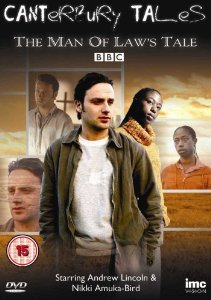
In the literature, Custance leaves her Christian home in Rome and plans to wed a Muslim Sultan in Syria. From this point on, Custance faces the hardships of death, suffering, religion, lies, and even femininity. To follow the fashion of a hagiography, Custance never whines or complains about her suffering, she keeps her faith strong and believes that God is always with her. Custance in many ways is a saint because she inflicted her beliefs and faith on those who did not believe. Custance attempted to convert the Muslims in Syria and successfully converted the Northumberlands from paganism to Christianity. Lies played a very active theme with Custance in the sense she was the intended victim, but those lies are shown the light in the end. Finally, Custance’s femininity is exemplified through her passive nature, in all if a woman tries to command her own fate, she is unfeminine in the eyes of the world. Chaucer’s tale in literature provides not only a context on medieval times, it gives a context on how women were put into a gender role and the rules they were meant to follow, which was ultimately them getting married and doing what they were told. 51hP8Ih16VL._SY300_.jpg
In BBC’s adaptation of “Man of Law’s Tale”, the writer remains true to the traditions of the story, 

but in some cases represents it’s own text. Yes, the media shows the story of a young, beautiful girl 
who grasps her faith and accepts life’s hardships. However, BBC fits the story’s timeline to fit a more 
modernized issue, which puts a focus on race. Constance, a nigerian refugee, who escapes from her 
invaded home, and ends up in England where she suffers from trauma and blacks out from time to 
time. Constance is true to her faith and in times where she is victimized, the truth reveals itself.  

Although conversion does not play a larger role in BBC’s Constance, femininity and race take hold of the story. Women, in present day, curve their own paths and create a standard that blurs the line of femininity, like Constance kissing Alan which was considered out of line for a woman back in time or even in Nigeria, people would talk about Constance’s pregnancy being impure and shameful. But when it comes down to adaptation, BBC’s contemporary media changed Constance’s race to highlight the prejudice in society and the struggles that refugees endure. Constance, being a female refugee, emphasized how women are judged for the choices they make or the perceptions people bestow on women. In all, one of the greatest comparison’s between BBC and Chaucer, both stories end with an irreducible uncertainty, which stays true to the Chaucerian tradition.