Showing posts with label Gender Roles. Show all posts

Thursday, April 21, 2016

Nature vs. Nurture: Sex Change Romances

In class we explored sex change romances, a reoccurring topic in medieval literature, notably the tale of Silence. The neomedieval books we studied also bore traits of gender confusion and appropriation, such as the path of Arya Stark in AGOT. I looked up some information about sex change romances and came across the article "How to be a Man, Though Female: Changing Sex in Medieval Romance" by Angela Jane Weisl. [Access it at http://ir.uiowa.edu/cgi/viewcontent.cgi?article=1813&context=mff.]
Weisl explores gender confusion and transformation in medieval literature, which she finds to be a "surprisingly popular topic." She states that the literature "offers a full range of gender potential, suggesting that the gendered body is permeable and malleable" and that "in more modern parlance, the romance implies that biology is far from being destiny." In class we discussed how Arya's journey through the A Song of Ice and Fire novel series seems to portray a more realistic struggle of a woman posing as a male as she struggles to embody and master masculine, rather than feminine, traits. In contrast, Silence seemed to portray a far more idealized depiction of a woman thriving as a man, for not only was her gender never questioned, but she was a wondrously successful knight [before her gender was exposed, at least].
A quote in Weisl's text helped me to understand why it was far easier for Silence to pose as a man than it was for Aria. Weisl states: "because knighthood is so explicitly defined in terms of gender, the women who pass as men in these stories are able to do so because of their rigid understanding of what nature means." This quote sheds some light on the nature vs. nurture debate that Silence examined. Since Silence was raised from a young age to live as a boy—she learned all the social cues of a man and was raised with the gendering of a male—it made it much easier for her to assimilate as one. She was exclusively and explicitly taught to think and act like a man, which gave her a solid grasp of how to be one. On the other hand, Aria clearly had an innate desire to jettison her traditional female upbringing, but since she was not allowed to learn the social customs and training of a boy, she struggled more when forced to live like one. Therefore, nurture clearly played a role in both females’ abilities to pose as men.

However, I find that both texts undermine the importance of nature. A debate over the "cultural and biological determinations of gender" can be read at http://articles.latimes.com/2004/may/13/local/me-reimer13, which delves into the sad story of David Reimer. After a botched circumcision rendered the male infant genitally deformed, his parents chose to raise him as a girl. Reimer lived for 14 years as a girl, but he “rebelled at [his] imposed identity from the start,” always knowing that something was wrong. After discovering what had happened, Reimer chose to live as a male, but the psychological scars were too devastating for Reimer to overcome. He eventually took his life at age 38. Therefore this very real case argues against some of the questions raised in the medieval sex change romances and neomedieval tales that we examined. Though gender is in part a product of social conditioning, I think that nature also plays a predominant role in shaping an individual, which Silence eventually comes to learn at the end of her tale, as she so seamlessly is able to embrace her biological female nature once women are allowed to inherit once more.

Thursday, February 18, 2016

Game of Thrones: Gender Roles and the Use of Power through a Medieval Woman


          The amount of authority a woman had depended solely on society.  Power was sorted among two divisions, the public and private sphere.  The public sphere was considered to be the domain of men.  The men had authority over the market, politics, and legal rights and obligations.  Then there was the private or domestic sphere which categorized women, mothers, and families into this group.  Women were considered to be the caretakers of their households and responsible for familial obligations.  Society's goals for women during these times was to please their husbands and children.  With this being said, one may think that men could only attain power. Yes, power was limited for women, but not completely.  It could be attained through certain circumstances, such as inheritance of land or marriage.  This is apparent in George R.R. Martin's A Game of Throne.  In a patriarchal society, Dany is a submissive female character.  However, she finds a way to claim power through marriage. Whether it be self-interest or not, it was the only way.  
          Dany, a  young thirteen year old girl,  is used as a pawn in her brother's power hungry game.  Her brother, Viserys, prepares her to be presented to Khal in hopes of marrying her off.  Indeed, all went well.  Surprisingly, the marriage forms a bridge of independence from the abusive experiences Dany encounters with her brother/guardian.  He was a "waking dragon" who often breathed fire and placed his anger on his younger sister.  He threatens her, he spits out, "Do you want to wake the dragon, do you?" (29).  He tightens her nipple as he evokes fear in her.  She responds obediently with a no "meekly" (29). Once married, throughout the book Dany gains confidence slowly.  Later within the novel her confidence is displayed in her thoughts and actions.  From an obedient and helpless girl under the care of her brother, Dany realizes "that she did not want to listen to any of her brother's complaints" (227).  With her marriage, she has gained power that led her to live a healthier life style. 


Women: Empowerment or Degradation?

So far, the readings we have encountered make it apparent that women during the Middle Ages are viewed as inferior to men. Along with other negative connotations and stereotypical roles, women are associated with beauty or physical attractiveness and highly regarded for their traditional family roles as well as religious devotion and virtue.

I’d like to focus on one video game in particular since it does hold some relevant themes of the Middle Ages; Dante’s Inferno. In summary, Dante is a crusader during the Third Crusade under King Richard I. During an attack, Dante is stabbed and defeats Death. As he returns home to Florence, he finds his lover Beatrice Portinari and father brutally murdered. Beatrice's soul appears before Dante and she is then taken by Lucifer. His mission is to save her by enduring eight trials in Hell.

I would like to compare Custance’s character from The Man of Law’s Tale and the character Beatrice in Dante’s Inferno. They share similar qualities- mostly in the way they are portrayed.  Both of these characters are revered for their Christian purity and seen as prizes to be pursued by male suitors. In The Man of Law’s Tale, Custance is dramatically idealized:
“There was never such another as is she,
I pray to God to sustain her in honor.
In her is great beauty, without pride/
In all her deeds virtue is her guide;
Humility has slain in her all tyranny/
Her heart is a true chamber of holiness” (162-167).
This passage makes it obvious of “woman’s difference from man, her otherness” and passiveness through religious undertones (Schinamoff  63).


In Dante’s Inferno, Beatrice is also put on a pedestal and represents Bennett’s and Karra’s definition of woman as “capable of extraordinary good, -the Virgin Mary’” (1). Compared to her lover Dante who has sinned countless times, Beatrice is proclaimed as beautiful, pure, kind and blessed; even her name implies beatific love: the ultimate direct self-communication of God to the individual person (Webster).

 The way these women are portrayed is with the most favorable qualities; humility, beauty, youth, virtue, passivity, and “pale” skinned. This showcases that they are ideal women to be had.  “Gender rules were similarly God- given, and the submission of women to men paralleled the submission of all humanity to God” (Bennett 5). In addition, this also meant submission was an automatic feature that came along with women’s wholesome qualities, and in these two cases these women are also being hyper idolized making them more dissimilar. Custance and Beatrice’s descriptions seem to elevate them and simultaneously degrade them. It may be flattering in a way, but the idealization of their passiveness and beauty can also be disempowering.


Sibling Rivalry: Power Play in "A Game of Thrones"


In George R.R. Martin’s A Game of Thrones, the progression of the relationship between Daenerys Targaryen and her brother Viserys shows Darnerys development as a woman of power. In the beginning, Daenerys is subjected to Viserys power over her, as she has no choice but to endure his cruelties in fear of “waking the dragon” (29). He thinks of her as his property that he can sell to Khal Drogo for his own personal gain in getting his crown back. When she marries Khal Drogo, she is no longer, in this sense, her brother’s property. While she clearly does not have freedom in the way she belongs to Khal Drogo, she becomes more in control. This agency begins when she takes away her bother’s horse so he has to walk back to the khalasar, which “among the Dothraki” is “the lowest of the low” a man can be to have his horse taken away (231). Viserys threatened her for giving him a simple command but he cannot fathom the idea of her being more powerful than him. This is seen before at Daenerys and Khal Drogo’s wedding when Viserys is made to sit in a place below the Khaleesi causing “his mood” to grow “blacker by the hour at each insult to his person” (101). In her marriage and new position though, Daenerys has the power to not submit to her brother’s will. She, backed by the Dothraki, has the ability to control her brother. Ironically, it was Viserys’s own actions that caused him to loose his power over his sister. He used his sister as a means to get back power without taking into account her wishes and in doing so he lost his control over his sister and is still no closer to his crown, giving him even less power than he had before. While she does not have power over her husband, she is no longer under the power of her brother. The Dothraki people honor her and in this way she holds Viserys fate in her hands.

Viserys and Daenerys Targaryen
Daenerys new sense of self-empowerment is seen, after she stands up to her brother, in her sexual affairs with Khal Drogo. She leads him outside and does not pay attention to the rest of the Dothraki watching them, as “it was nothing to her” being justified in her position: “was she not the khaleesi?” (236). Her sex life was still not under her control but she was starting to use her situation to her advantage.

Khal Drogo and Daenerys
The moment that Daenerys stands up to her brother is a turning point in her evolution of becoming more in control of her own actions and decisions.

Chaucer's Gender Role to BBC's Race


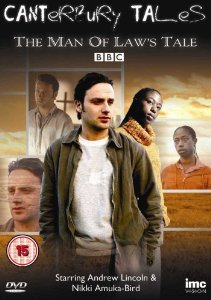
Every story can undergo a certain kind of adaptation. Sometimes a story can be translated from different languages and sometimes it can adapt into a whole other interpretation. An example of literature’s many adaptations is between Geoffrey Chaucer’s “The Man of Law’s Tale” and BBC’s “Man of Law’s Tale”. Both the literature and media stories follow a young girl named Custance or Constance, who has a strong Christian faith and overcomes many hardships in her life. Although the literature and media keep a faithful tradition to many themes, the media adaptation opens up a perspective with the race and origin of the story.
In the literature, Custance leaves her Christian home in Rome and plans to wed a Muslim Sultan in Syria. From this point on, Custance faces the hardships of death, suffering, religion, lies, and even femininity. To follow the fashion of a hagiography, Custance never whines or complains about her suffering, she keeps her faith strong and believes that God is always with her. Custance in many ways is a saint because she inflicted her beliefs and faith on those who did not believe. Custance attempted to convert the Muslims in Syria and successfully converted the Northumberlands from paganism to Christianity. Lies played a very active theme with Custance in the sense she was the intended victim, but those lies are shown the light in the end. Finally, Custance’s femininity is exemplified through her passive nature, in all if a woman tries to command her own fate, she is unfeminine in the eyes of the world. Chaucer’s tale in literature provides not only a context on medieval times, it gives a context on how women were put into a gender role and the rules they were meant to follow, which was ultimately them getting married and doing what they were told. 51hP8Ih16VL._SY300_.jpg
In BBC’s adaptation of “Man of Law’s Tale”, the writer remains true to the traditions of the story, 

but in some cases represents it’s own text. Yes, the media shows the story of a young, beautiful girl 
who grasps her faith and accepts life’s hardships. However, BBC fits the story’s timeline to fit a more 
modernized issue, which puts a focus on race. Constance, a nigerian refugee, who escapes from her 
invaded home, and ends up in England where she suffers from trauma and blacks out from time to 
time. Constance is true to her faith and in times where she is victimized, the truth reveals itself.  

Although conversion does not play a larger role in BBC’s Constance, femininity and race take hold of the story. Women, in present day, curve their own paths and create a standard that blurs the line of femininity, like Constance kissing Alan which was considered out of line for a woman back in time or even in Nigeria, people would talk about Constance’s pregnancy being impure and shameful. But when it comes down to adaptation, BBC’s contemporary media changed Constance’s race to highlight the prejudice in society and the struggles that refugees endure. Constance, being a female refugee, emphasized how women are judged for the choices they make or the perceptions people bestow on women. In all, one of the greatest comparison’s between BBC and Chaucer, both stories end with an irreducible uncertainty, which stays true to the Chaucerian tradition.