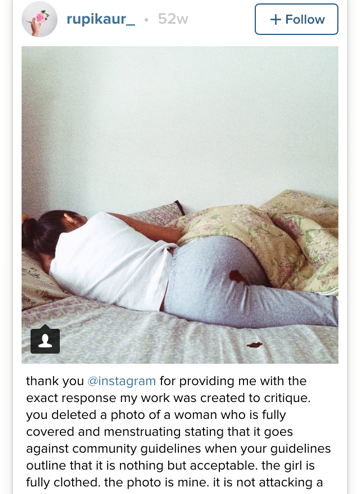
You wake up one morning double over in pain. You can't walk. You can't eat but you still throw up because you are in so much pain. Just a typical day on your period.
Despite this being the worst pain that you've ever felt, having cramps and being on your period is not something that you can talk about much less an valid excuse to miss class. With most professors being male, talking openly and honestly about why you are pale and shaky and why you miss class is not something that you feel comfortable doing. Even if that were possible, most professors wouldn't understand the pain.
That's not the main complaint, however. The societal phobia of periods and the barrier that prevents you from talking about it is the main issue. You know, despite the actual blood coming from you body.
This societal phobia is not anything new. In the medieval times, period blood was even more feared and taboo that it is today. In Only Women Bleed it says that "Women's blood-menstruation and the blood or parturition-have long been associated with pollution in the Judeo-Christian tradition" (3). This traces back the Eve and after the original sin, both men and women were punished. Men were cured with working in the sun for their food and women were cursed with periods and painful childbirth. Even though men were also cursed, it was the women's punishment that became taboo and a negative symbol.
 Expanding the definition of virginity and purity that we know today, in medieval times women that were considered virgins and pure were not just women that abstained from premarital sex. These pure women also did not bleed. This is, of course, ridiculous, since women cannot reasonable control whether or not they have their period. Even though this more extreme view has not been carried over to present day, the fear of women starting their periods is still very real and present. People worry that once a girl's period starts, she will also become sexually aroused, have sex, and get pregnant. There is a sort of innocence around a girl that has not started her period.
This negativity and way of thinking continues through today. Men and even women are uncomfortable talking about periods and most things associated with the uterus, even though it is a natural part of the female body. In fact, it is actual a sign of a fertile, healthy woman. Despite that fact, when a girl is in pain while she is on her period, the chances of her actually saying that to a male or even female professor is very slim. This is because you don't want to make anyone uncomfortable or come across as weak. Most of the time, you just say it's stomach pains or say something else vague or simply avoid saying anything at all. While we are lucky enough to now have all of the taboos that women in the medieval ages had to deal with, being a woman with a functioning uterus is still difficult.
Despite this being the worst pain that you've ever felt, having cramps and being on your period is not something that you can talk about much less an valid excuse to miss class. With most professors being male, talking openly and honestly about why you are pale and shaky and why you miss class is not something that you feel comfortable doing. Even if that were possible, most professors wouldn't understand the pain.
That's not the main complaint, however. The societal phobia of periods and the barrier that prevents you from talking about it is the main issue. You know, despite the actual blood coming from you body.
This societal phobia is not anything new. In the medieval times, period blood was even more feared and taboo that it is today. In Only Women Bleed it says that "Women's blood-menstruation and the blood or parturition-have long been associated with pollution in the Judeo-Christian tradition" (3). This traces back the Eve and after the original sin, both men and women were punished. Men were cured with working in the sun for their food and women were cursed with periods and painful childbirth. Even though men were also cursed, it was the women's punishment that became taboo and a negative symbol.

This negativity and way of thinking continues through today. Men and even women are uncomfortable talking about periods and most things associated with the uterus, even though it is a natural part of the female body. In fact, it is actual a sign of a fertile, healthy woman. Despite that fact, when a girl is in pain while she is on her period, the chances of her actually saying that to a male or even female professor is very slim. This is because you don't want to make anyone uncomfortable or come across as weak. Most of the time, you just say it's stomach pains or say something else vague or simply avoid saying anything at all. While we are lucky enough to now have all of the taboos that women in the medieval ages had to deal with, being a woman with a functioning uterus is still difficult.